

Effectively Utilize Human Resources
We at the JCU Group believe that making effective use of the individual abilities of employees is a major pillar of our management, and are working to develop human resources and create comfortable working environments.
Achieving Employee Retention
Average Years of Continuous Employment
(Non-consolidated)

JCU carries out initiatives to ensure employee retention. We encourage employees to make use of opportunities to discover and develop their own abilities such as by taking self-development seminars, visiting trade shows that can potentially help grow our business, and taking language training courses. We also ask all individuals to use a goal management sheet to set their personal goals. This sheet is designed to help individuals express their individual goals with more clarity, and check whether they are able to perform work that is a step above and is more rewarding for themselves. In addition, we are also enhancing our employee benefit programs as a way of creating a comfortable working environment.
Furthermore, JCU makes efforts to develop human resources able to respond to globalization through stratified training and technical workshops aimed at enhancing specialized knowledge and skills. These efforts have led to the establishment of a structure that facilitates continuous employee growth and contributes to enhancing the Company’s competitiveness.
As a measure of whether these initiatives contribute to employee retention, JCU calculates the new employee retention rate, average number of years employed, and turnover rate.
The retention rate for new employees hired during the past three years (FY2022–FY2024) remained high at 95.2%. The average number of years employed (men and women combined) was 16.3 years, an improvement over FY2023. Compared to industry averages for years employed (in manufacturing, 15.9 years for men and 11.9 years for women, for a total of 14.9 years*1), JCU numbers were higher for both men and women. The average number of years employed has been gradually trending higher among both men and women since FY2019.
The FY2024 turnover rate was 4.4% (manufacturing industry average turnover rate in the first half of FY2024 was 5.1%*2). A breakdown of the turnover rate shows that 3.2% left for personal reasons, 0% for company reasons, and 1.2% for retirement or other reasons.
*1 Excerpted from the “2024 Basic Survey on Wage Structure–Results and Overview” from the Ministry of Health, Labour and Welfare
*2 Excerpted from the “2024 Survey on Employment Trends–Results and Overview” from the Ministry of Health, Labour and Welfare
Harassment Countermeasures
As a measure to counter harassment. the JCU Group provides a permanent sexual and power harassment consultation section in-house. One man and woman are assigned at all offices as contact persons in charge, and this is communicated to all employees on the intranet to create an environment where people feel comfortable seeking consultation. In addition, we have formulated a harassment prevention policy for all employees, and make every effort to prevent various types of harassment. resolve issues, and protect privacy.
In addition, we have also established a consultation desk outside the Company (Employee Assistance Program [EAP]) for addressing mental health and various harassment issues so that we are able to quickly act on stress and anxiety issues that employees may have. We provide mental health care training headed by EAP lecturers, distribute pamphlets and cards, and publish information on the intranet four times a year as part of our efforts to create an environment where all employees, including managers, are able to work comfortably.
Status of Employee Training on Mental Health and Harassment (Non-consolidated)

Diversity and Equal Opportunity
The JCU Group respects diversity and strives to realize equal opportunity. There are no gender differences in our terms of employment.
Number of Employees (Non-consolidated)

Percentage of Full-time Employees
(Non-consolidated)

Percentage of Female Managers
(Non-consolidated)

Number of People with Disabilities
(Non-consolidated)/
Foreign National Employees
(Non-consolidated)

Childcare and Nursing Care
In order for employees to make the most of diversity in performing their work, JCU provides a childcare leave program that allows employees to take more days off than the statutory minimum stipulated by the Ministry of Health, Labour and Welfare, and a shortened working hours program for childcare that is also used by male employees. We also provide a similar nursing care leave program.
Number of Employees Who Took Childcare Leave (Non-consolidated)

Overview of Maternity Leave, Childcare Leave, and Nursing Care Leave Programs

Childcare Leave at Birth (Postpartum [after birth] Childcare Leave for Fathers)
JCU has created a variety of workplace environments where both men and women can work with peace of mind. We asked employees who took childcare leave for fathers (postpartum childcare leave) about their feelings before and after taking the leave, as well as their situations at work and home.

Legal Department, Administration Division Yoshiaki Shirakawa
Q1.Why did you decide to take childcare leave, and how did you find the experience?
I have always loved children, so I wanted to actively participate in childcare. Additionally, since we have a daughter who just started elementary school, I wanted to be there for my family—including my wife—as much as possible, providing both physical and emotional support. The fact that postpartum childcare leave can be taken in segments also encouraged me to take childcare leave.
Q2.What were some of the experiences you had, and how is your child doing now?
I took childcare leave in two segments. During the first segment, I was able to fully support my wife from childbirth until she was discharged from the hospital. However, during the second segment, my wife became ill and had to be hospitalized. With the support of my parents, I managed to care for our two children and look after my hospitalized wife. My wife has since recovered, and my son is growing up healthy and strong.
Q3.What message do you have for employees who are going to take childcare leave?
The early years of a child’s life are an important time that happens only once. JCU encourages employees to utilize childcare leave, and provides a supportive environment with work support systems. I sincerely hope this program will be used to create lasting family bonds.
Human Resource Development
In our medium-term management plan announced in May 2024, the JCU Group has set “Effectively utilize human resources” as one of the basic policies and materialities. Among these, we believe that human resource development is an essential issue for realizing the vision we uphold for our Company. For this reason, JCU is working hard to improve its human resource development programs along with various other initiatives.
New employees undergo training in various departments for approximately two months after joining the Company, including technical training in which they learn the principles of surface treatment through experiments, factory training in which they learn the chemical manufacturing process from raw material input to shipment, and sales training in which they accompany their seniors to customers’ production sites where our chemicals are being used. This allows employees to experience the strengths of the JCU Group in the field, and acquire the basic knowledge that they will need to provide better products and services. In addition, we also conduct regular information security and compliance training to prevent information leaks and ensure compliance with laws and regulations.
As an example of our human resource development efforts at each of our business locations, the Niigata Plant Production Department conducts training programs to strengthen our capability to detect near misses and other problems. The R&D Center has adopted a skills matrix to provide employees with an objective view of their individual abilities and to raise their awareness of their own capabilities. The Sales Office has created a “Sales Capability Development Activity Plan Progress Management Sheet” to help employees acquire the necessary skills. Our overseas offices also held a variety of training sessions, including technical, legal, and regulatory study sessions on laws and regulations to improve the skills of local employees.
Furthermore, JCU offers the training programs shown in the table below to help employees grow in ways that are consistent with the globalization of our organization.
The JCU Group will continue to implement a variety of measures for the development of its employees.
Human Resources that the JCU Group Seeks
Human Resources that the JCU Needs
Talent with excellent development capabilities
Talent with excellent supportive capabilities
Talent who are able to act globally
Talent who have a management perspective
Themes
- Strengthen expertise required for product development
- Improve technical and sales capabilities of local staff
- Newly establish an overseas assignment experience program
- Enable shifts to career paths suitable for a global structure
- Strategic staffing
- Reinforce management training for managers and management candidates
Language Training Program
We offer language training programs as part of our effort to develop globally capable human resources.
For the purpose of improving our employees’ language skills and promoting their selfdevelopment activities, we have replaced conventional language training programs—where instructors were brought in to give lessons—with e-learning, or online language training, which enables learners to combine self-study (input) and online English conversation (output).
Overseas Training Program
We launched an overseas training program for younger employees in FY2021. The objective of this program is to provide applicants who are interested in working overseas with a short-term work assignment at an overseas subsidiary, and through this experience, to help them grow into talent with a global perspective.
We also expect employees to rediscover their individual aptitudes through direct exposure to different working styles and cultures they encounter in different countries.
Training Programs for Human Resource Development

Local Subsidiary Introduction Materials Aimed at Deepening Global Understanding
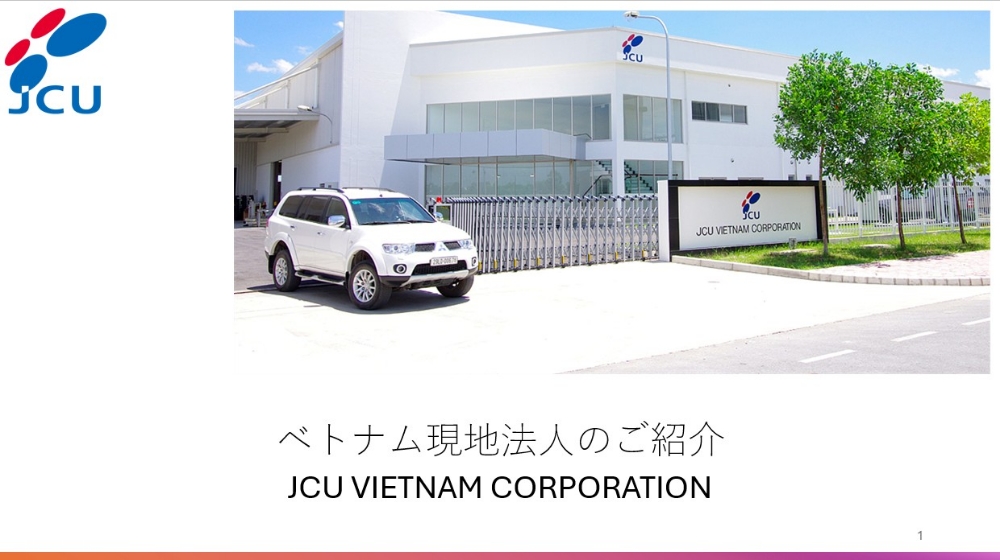
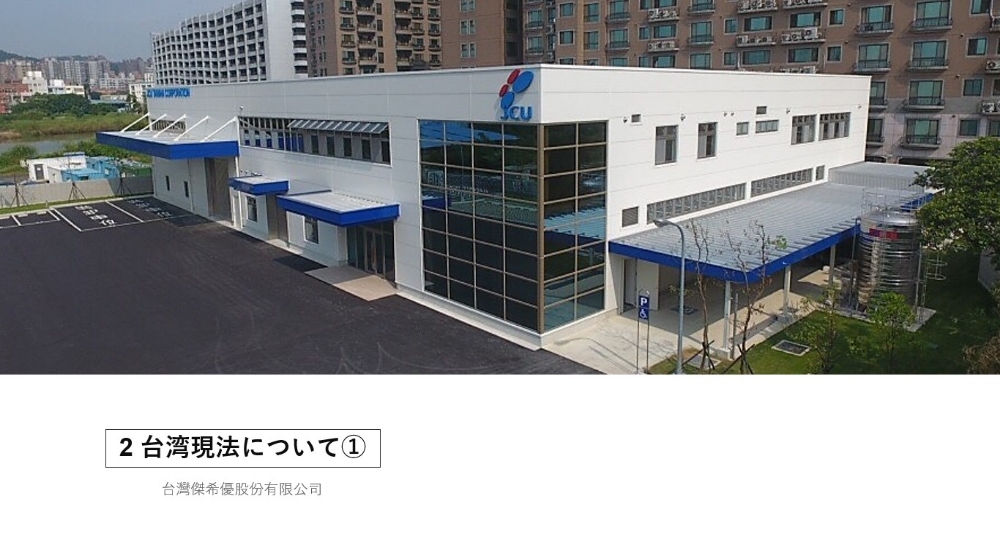
JCU creates local subsidiary introduction materials once a year and posts them on the Company intranet to help employees understand the business activities, operating environments, internal atmospheres, and cultures and characteristics of each country and region where JCU overseas subsidiaries operate.
These materials are created by Japanese employees assigned to posts overseas, and feature the organizational structure of the overseas subsidiaries, comments from employees on assignment, and scenes from local travels and company events, effectively communicating the internal company atmosphere. Furthermore, the materials convey local charm through abundant photographs, showcasing everything from traditional ethnic culture and culinary traditions to tourist attractions and scenes of daily life.
Through local subsidiary introduction materials, we aim to foster a sense of identity as an employee of a global corporation by deepening understanding of overseas subsidiaries among as many employees as possible.